
A key role in the development of the Vguard device was played by a research team from the Faculty of Biology and Environmental Protection of the University of Lodz, whose scientific findings became the foundation for the development of new technological solutions incorporated into the device.
A Challenge for Modern Medicine
Alzheimer’s disease is one of the greatest challenges facing modern medicine. The number of patients worldwide is growing at a dramatic rate and may exceed 50 million over the coming decades, placing a burden not only on healthcare systems but also on patients’ families. Research into the neuronal mechanisms underlying cognitive processes, conducted for many years at the Department of Neurobiology of the University of Lodz, led to cooperation with Cogniguard and the implementation of research on non-invasive vagus nerve stimulation (VNS). These studies laid the foundations for innovations making use of the physiological period of memory consolidation, namely sleep.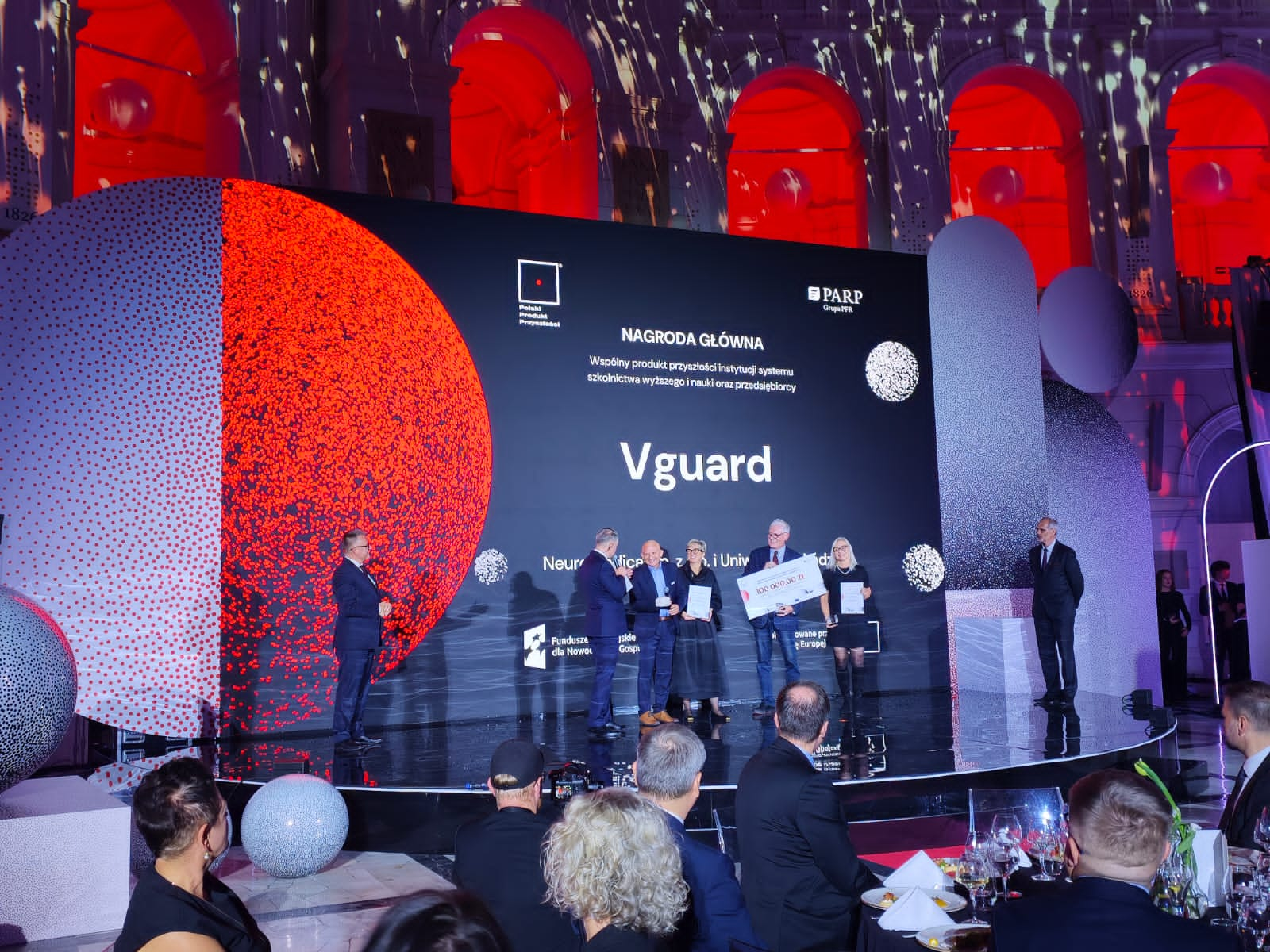
Research Involving UniLodz Scientists
The work carried out is explained by dr hab. Renata Bocian, Associate Professor at the University of Lodz, Head of the Department of Neurobiology at the Faculty of Biology and Environmental Protection of the University of Lodz:
Dr hab. n. med. Adam Broncel presented us with the idea behind the research, whose aim was to determine whether vagus nerve stimulation, a method used for many years in the treatment of drug-resistant epilepsy, depression, and migraines, could also be applied in the therapy of memory disorders. A breakthrough stage of our research was demonstrating that vagus nerve stimulation induces a response in the hippocampus, a brain structure associated with memory and learning processes. In response to the stimulation, we observed theta rhythm activity in the hippocampus, a physiological marker of memory consolidation. In subsequent stages, we went a step further and attempted to determine the neurochemical basis of the observed effect. The results suggest that vagus nerve stimulation induces increased release of endogenous acetylcholine and noradrenaline in brain structures involved in the memory consolidation process. Activating this mechanism requires only an appropriate initiating stimulus, such as the electrical impulse generated by the Vguard device. The data obtained during the research also allowed us to determine preliminary parameters for optimal stimulation, as it was demonstrated that the effectiveness of this method depends on using the appropriate stimulation protocol. As someone who has been conducting scientific research for nearly 30 years, I would like to emphasise that one of the most important aspects of experimental work is the moment when research results become the basis for creating innovative solutions or technologies with genuine social significance. Research carried out in recent years at the Department of Neurobiology of the University of Lodz is an excellent example of this approach. The results of these studies, including preclinical research, became the foundation for the development of a new therapy for cognitive disorders. Being involved in a project that has resulted in the development of an extremely promising neuromodulation-based therapeutic method for memory disorders is a particularly valuable professional experience for me.
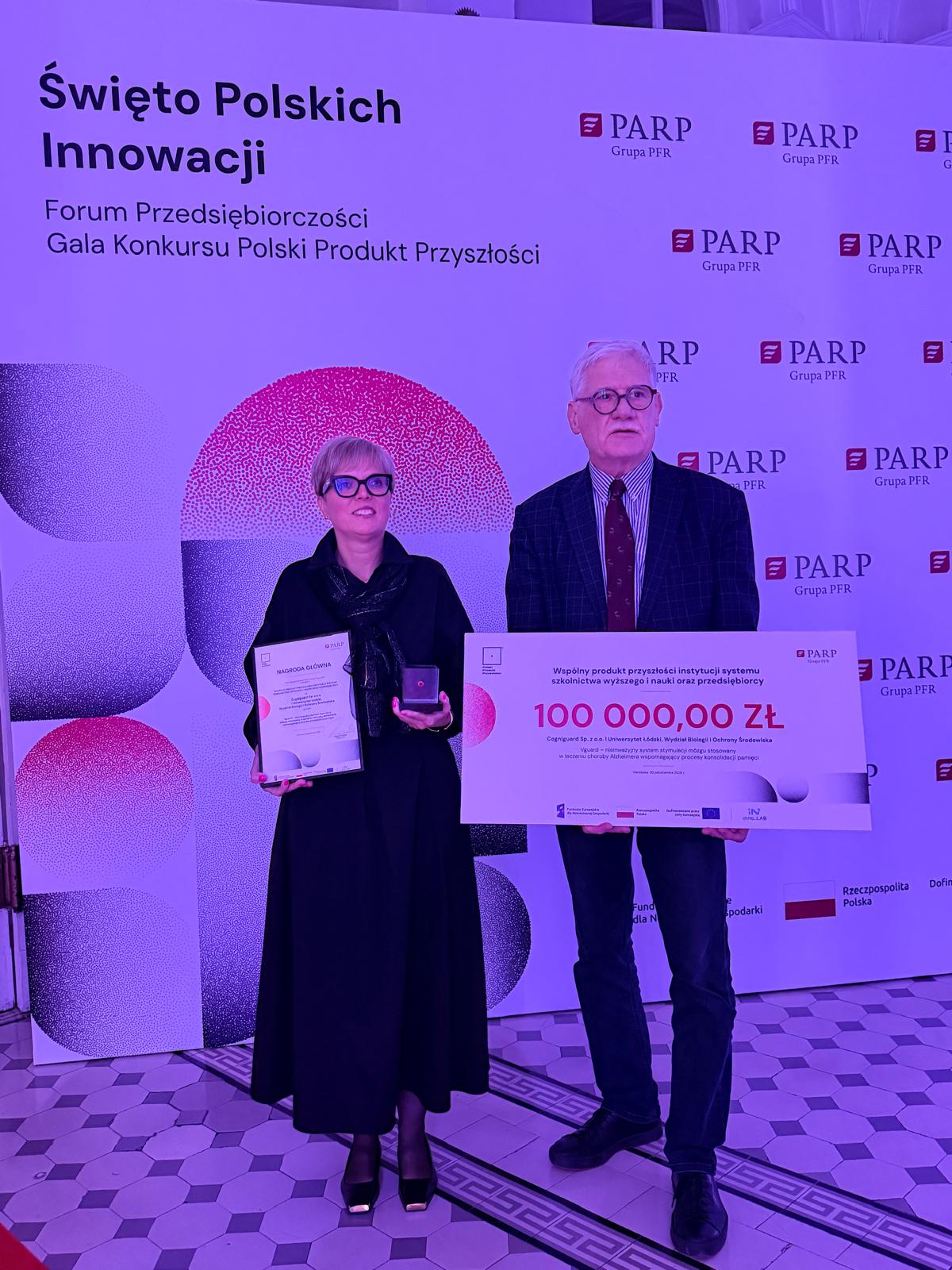
As Prof. Jan Konopacki, consultant and researcher under whose supervision the studies were conducted, points out:
The task of the Department of Neurobiology team was to develop preclinical studies using an animal model that would enable the future development of clinical protocols, vagus nerve stimulation parameters, and the collection of many other pieces of information necessary in the therapeutic process (...). During this period, we made a significant discovery that came to dominate subsequent projects. We found that electrical stimulation of the vagus nerve induces hippocampal theta rhythm, an EEG activity associated with REM sleep and memory consolidation.
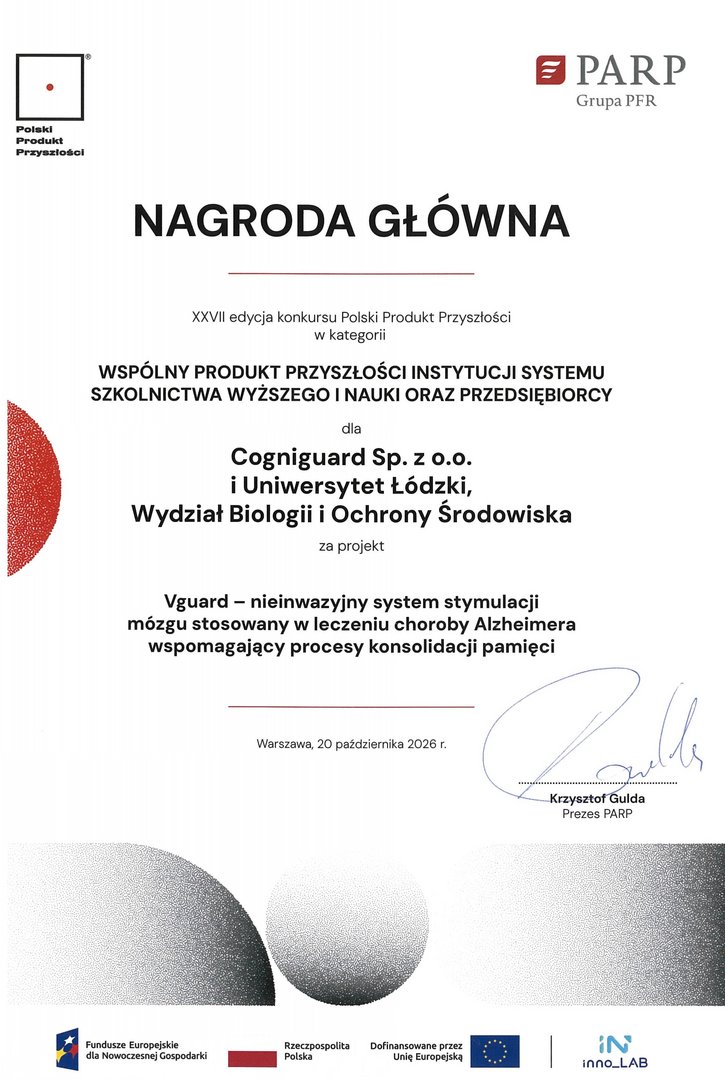
Innovation in Neurostimulation
The Vguard device is a non-invasive brain stimulator designed for independent use at home during sleep. The device works by transmitting precisely controlled electrical impulses to the central nervous system via the vagus nerve, thereby influencing the activity of the hippocampus, a structure crucial for memory consolidation.
Tangible Therapeutic Effects
The first studies, lasting from three to six months, were conducted on a group of more than 50 patients with early-stage Alzheimer’s disease and mild cognitive impairment (MCI). The results exceeded the research team’s expectations. Initially, the goal had simply been to slow down or halt disease progression. Instead, patients demonstrated significant improvements in cognitive parameters, confirmed statistically. – We observed real benefits for patients, ranging from improved orientation and concentration to the ability to return to everyday activities that had previously become difficult. Both patients and their caregivers reported improvements in quality of life
– says Adam Broncel.
From Fundamental Research to Innovation
The Polish Product of the Future award is not only a distinction for the innovative Vguard technology but also the culmination of many years of work by researchers who consistently developed their studies from laboratory experiments to a solution with real therapeutic potential. It demonstrates that fundamental scientific research conducted at the University of Lodz can translate into practical innovations addressing the most important challenges of modern medicine and improving patients’ quality of life. This success confirms the importance of cooperation between science and business and shows how knowledge, determination, and the long-term commitment of researchers can lead to the creation of technologies with international significance. The award marks the culmination of a journey from scientific discovery to a product that has the potential to genuinely transform the lives of people living with neurodegenerative diseases.
Source and edit: Mateusz Kowalski and Kamila Knol-Michałowska (Promotion Centre, Faculty of Biology and Environmental Protection, University of Lodz)
Video material and photo: Polish Agency for Enterprise Development
Photos: dr hab. Renata Bocian, Associate Professor at the University of Lodz (Department of Neurobiology, Faculty of Biology and Environmental Protection, University of Lodz)