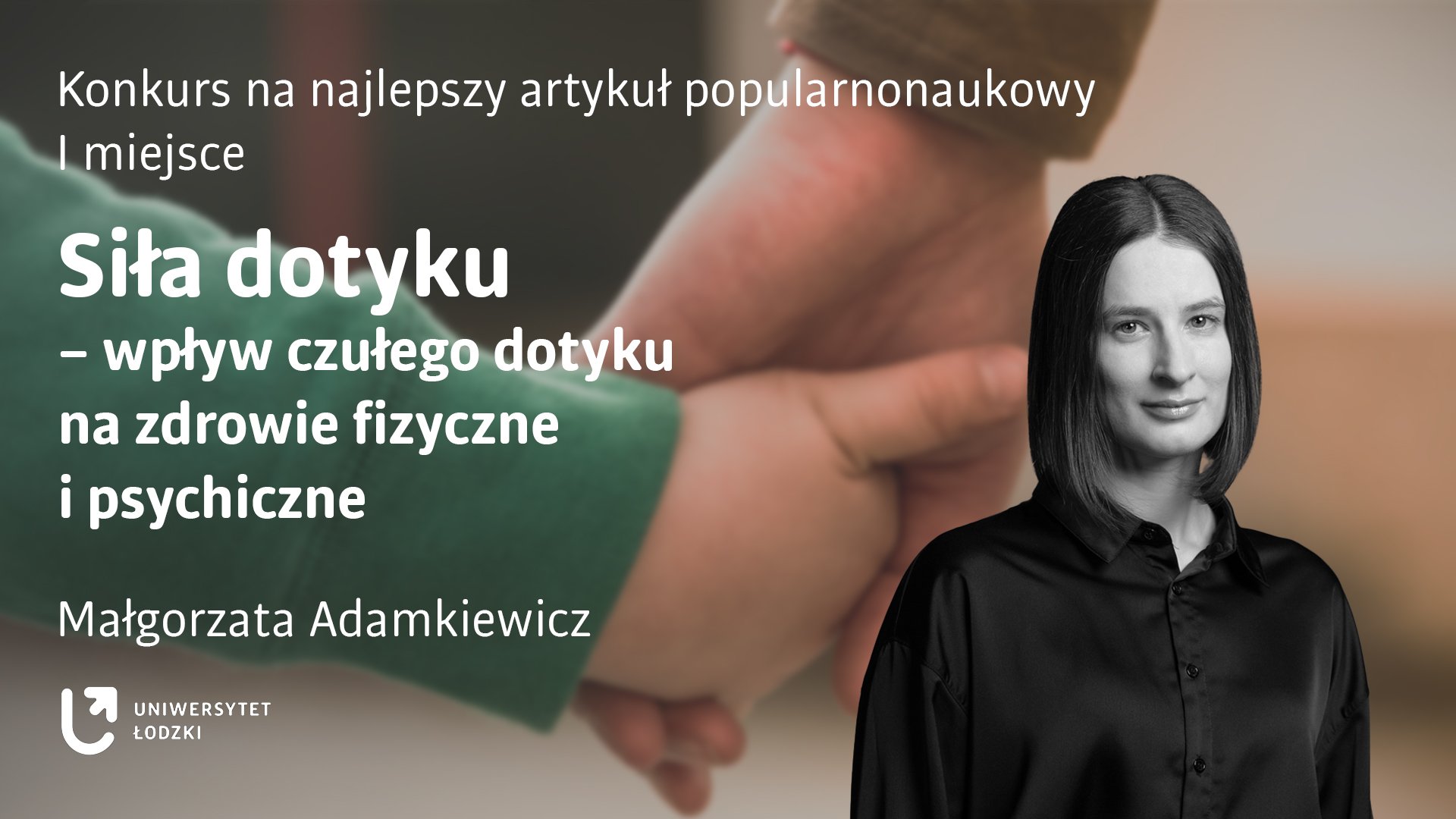
Touch has accompanied animals since the dawn of time and is considered one of the most primitive ways of communication. Starting from the simplest organisms, in which touch is a navigational form and provides defence by identifying and receiving external stimuli, to more complex organisms that have evolutionarily developed mechanisms that make touch not only one of the senses, but also an essential part of social interactions. In invertebrates and lower vertebrates, such as insects and fish, delicate forms of tactile communication can be observed, but it is in birds, and especially in mammals, that touch has become the main tool for maintaining and strengthening bonds. For humans and other primates, touch has become particularly important in social and family relationships, providing a sense of security and regulation of emotions. Various forms of touch, such as holding hands and hugging, and in animals also sniffing or other grooming behaviours, cause the release of oxytocin – a peptide hormone involved in modulating social and cognitive behaviours, as well as reducing stress. The importance of oxytocin's mechanisms of action is particularly evident in maintaining bonds between parents and offspring, between partners and in relationships with members of a social group. Oxytocin is synthesised mainly in the paraventricular nuclei of the hypothalamus, then it goes to the posterior pituitary gland, where it is stored until it is released into the systemic circulation [1].
The beginnings of touch research
Information about the importance of touch, especially in early childhood, was presented to the world of science by Harry Harlow in a study from 1958, which is still known today. He isolated young royal macaques from their mothers, which then came into contact with artificial figurines imitating the mother. The mannequins were covered with a soft material or wire coating with food inside. Macaques preferred to stay and have contact with a "mother" pleasant to the touch despite the lack of food, while they chose the second only when they felt hungry. A repellent mechanism was then added to the surrogate mothers with fur. After the introduction of the stressor that scared the young, they still preferred to cuddle up to the soft fabric despite previous unpleasant experiences. The experiment was tragic for macaques. Cubs deprived of affection of their mothers in childhood were less trusting in adult life, did not engage in herd life, while females with offspring often rejected them [2].
Why does sensitive touch have beneficial properties?
We associate a tender touch with a pleasant stimulation, gentle stroking with light pressure and a temperature similar to ours. Sensory stimuli received by the corresponding receptors in the mammalian skin are then transmitted by specialised nerve fibres called C-touch fibres. They convey information about slow and stable stimuli. It is the much slower, tender touch that causes more activity in oxytocin neurons. In a study on young mice that were stroked to replicate the mother's early care for her offspring, it was tested whether this had an effect on oxytocin secretion and later social behaviour. The group stroked with a soft cotton swab at the appropriate speed, which simulates a sensitive touch, showed greater activity of the oxytocinergic system. Mice after tactile stimulation were more likely to choose a cotton substrate and spend more time on it than on a less soft bedding. They also spent more time socially interacting with other individuals [3].
The impact of tender touch on newborns and parents
For more than two decades, the World Health Organization has recommended the use of skin-to-skin contact between the newborn and the caregiver immediately after birth. This is commonly referred to as the Kangaroo Mother Care method and is now considered standard in practice right after birth, even without an earlier period in the incubator. Kangaroo Mother Care riding has many benefits for both the newborn and the parents. Better breastfeeding, infant growth and development, less stress for parents and deepening of the parent-child bond were indicated [4].
During Kangaroo Mother Care, the level of oxytocin in newborns increases significantly, and the level of cortisol, i.e. the stress hormone, decreases [5]. Skin-to-skin contact can be particularly important for babies born prematurely. Premature babies are exposed to many stressors related to procedures, the absence of a parent and a long stay in an incubator. Although all these activities are essential to improve the health and sometimes even maintain the life of the newborn, they have their effects in the future. Going through early life with such experiences and chronic stress results in structural and functional changes in the brain, contributing to lifelong neurological changes and behavioural disorders. Kangaroo Mother Care performance improves stress-related outcomes in premature babies in an incubator. Skin-to-skin contact stabilises heart rate and respiratory rate, as well as improves body temperature regulation. However, the reaction of the newborn depends on whether they perceived the presence in the incubator as stressful [6]. The benefits of Kangaroo Mather Care also apply to parents. Birth is a very stressful time for a mother and father. Stress is further intensified when the child has to be hospitalised for a longer period of time. Physical contact significantly increases oxytocin levels and reduces anxiety in caregivers [7]
Isolation and social distancing
The 2019 pandemic caused by the SARS-CoV-2 coronavirus spread around the world. Due to this state of emergency, countries took many measures to protect public health. One of the first, aimed at preventing the spread of infection, was to maintain social distance by not having physical contact with other people. At the beginning, when the disease was still unknown, social distancing ensured a reduction in the potential infection of uninfected people. This minimised the transmission of the virus and its subsequent consequences, i.e., illness, complications with other diseases, and mortality. However, these steps were very important because, due to the frequent separation of loved ones, they were unable to show physical affection towards each other. This was especially felt by family members and friends, but also by co-workers. In this way, people were deprived (albeit for their own safety) of positive physical contact, i.e., hugs, kisses, or holding hands. These are the basic elements that people should experience, as they are an important part of social-emotional and physical and cognitive development. The pandemic was the perfect opportunity to study how a lack of contact with others affects people. Based on the survey, it can be concluded that the longing for touch during the COVID-19 pandemic has affected the quality of physical, psychological and social life. In terms of the physical aspect, the lack of touch, especially before bedtime, can worsen its quality. Mentally, touch can act as a buffer against stress and reduce anxiety and feelings of depression, while in terms of social quality of life, touch can promote social bonds [8]. A study examining the relationship between affectionate touch and mental health and hormonal changes has found that affectionate touch lowered cortisol levels and subjectively reduced stress, as well as increased happiness. In addition, the increased intensity of sensitive touch more clearly reduced subjective feelings of anxiety and stress and was associated with higher levels of oxytocin. It should be emphasised that the study of these aspects is difficult and can be fraught with error, because subjective feelings are influenced by many factors, such as age, gender, social functioning or self-esteem [9].
Massage as a form of tender touch in adult life
Therapies based on various forms of touch have been known for thousands of years. These practices are related to beliefs and folk medicine and mentions of massage can be found in many countries and cultures. Powers such as India, China, Egypt and ancient Greece used massage even before the birth of Christ. At the time, it was claimed that massage has beneficial properties not only related to relaxation but is also an effective method of treating mental and physical health. To this day, the practices of such therapy have not changed much, and massage techniques have evolved slightly, adapting to the results of modern science. From ancient times to the present, the most popular massage techniques are: kneading, rubbing or slow stroking movements [10]. The benefits experienced after massage contributed to research being undertaken in this area. Nowadays, stress is much more felt and reported as a public health problem. It is present at any age, but its excess in young people may have its consequences in the future. Excessive stress and the associated increased secretion of cortisol carry the risk of health problems, including those related to the cardiovascular system, sleep problems, diabetes and obesity, as well as depression. That is why it is so important to look for techniques for coping with stress and methods to reduce it. Massage can be one of them. Even a short massage, lasting no more than 20 minutes, consisting of gentle, repetitive compression of the back, neck and shoulder areas, affects the psychological and physiological parameters of its recipients. This is associated with a reduction in stress and anxiety and an increase in self-confidence in the massaged individuals. Physiologically, oxytocin levels increase after a massage session, which may be associated with an improvement in psychological parameters [11]. For people with chronic fatigue syndrome, which significantly affects the mental and physical health and quality of life of patients, therapeutic massage is an effective therapy for the disease. It relieves symptoms of fatigue and individuals experience less mental and physical fatigue compared to other therapies [12]. Massage affects physiological changes taking place in the body. It reduces the activation of the sympathetic system, responsible for mobilisation and stress in the body, while increasing the activity of the parasympathetic system, which provides rest and relaxation. A twenty-five-minute scalp massage significantly reduces the levels of adrenaline, norepinephrine and cortisol, commonly referred to as stress hormones. Systolic and diastolic heart pressure is also reduced, which is associated with reduced activation of the sympathetic system [13]. Massage is also proposed as an additional alternative therapy in alleviating the symptoms of mental disorders, as its positive effect on depressive symptoms is observed. It is also important for pregnant women diagnosed with depression. Regular massage for a period of 12 weeks significantly reduces the symptoms of depression until the end of pregnancy, as well as postpartum depression and cortisol levels. The risk of premature birth and low birth weight, which are common in pregnant women struggling with depression, are also reduced. Patients with anxiety disorders receiving therapy supported by massage performed by a partner experience a reduction in generalised anxiety and their need to take anti-anxiety medication decreases. However, due to the complexity of mental disorders, further research and standardised massage therapy protocols are needed in this area, taking into account different disease assessment scales [14, 15].
Interspecies touch – mutual benefits
Touching an animal, such as a dog or horse, is one of the non-pharmacological methods used to alleviate symptoms found in a wide range of medical conditions. It is particularly applicable in such clinically diagnosed diseases as: depression, post-traumatic stress disorder or even dementia. Physical contact with an animal affects health outcomes related to physical and mental parameters, e.g. stress reduction [16]. A dog is considered to be a man's best friend, but is it possible to determine the impact of closeness on the positive emotions associated with this relationship? Positive emotions in dogs are caused by many factors – both physiological, such as food or physical activity, and behavioural, related to petting. Each of these stimuli causes an increased secretion of oxytocin in the animal, so this hormone can be treated as a biomarker of positive emotions [17]. Physical contact is important in the relationship between the owner and their dog. When an animal receives physical and verbal contact from a human, oxytocin levels are higher and last longer, and cortisol levels drop markedly. Such big hormonal changes do not occur when the dog only sees and hears the owner's voice. Stroking also causes behavioural changes that are associated with arousal and positive emotions in a dog [18]. In humans, after interacting with their dog, oxytocin levels also increase, as well as a marked decrease in heart rate and cortisol levels can be observed. Mutual physical contact therefore has a beneficial and calming effect on both species [19].
Summary and conclusions
Many studies have proven the positive impact of touch, especially the one described as tender and loving. Its beneficial effects include both the physical and mental spheres. Babies and children gifted with affectionate touch show positive changes in psychosocial development.
We should remember to show feelings through touch. Let's share it as often as possible!
Two new competitions!
In 2026 we will announce not one, but two competitions in which those studying at the University of Lodz will be able to test their skills in popularising science.
- Firstly: the second edition of the Competition for the best popular science text – in the same formula, with two categories (individual and team) and a limit of 14 thousand characters. One important novelty: we are increasing the prize pool for first place!
- Secondly: Popular science film competition, intended for sstudent science clubs of the University of Lodz. As part of it, it will be possible to obtain funding for the development of the club's activities.
The whole city knows about the competition winners!
We encourage you to read the article in Gazeta Wyborcza about the competition's recent edition (in Polish)
Bibliography
1. Marsh N., et al. Oxytocin and the Neurobiology of Prosocial Behavior. The Neuroscientist. 2021; 27(6).
2. Harlow H. F. The nature of love. American Psychologist. 1958; 13(12).
3. Yu H., et al. Social touch-like tactile stimulation activates a tachykinin 1-oxytocin pathway to promote social interactions. Neuron. 2022; 110(6).
4. www.who.int/publications/i/item/9241590351 (dostęp: 26.03.2025).
5. Vittner D., et al. Increase in Oxytocin From Skin-to-Skin Contact Enhances Development of Parent-Infant Relationship. Biol Res Nurs. 2018; 20(1).
6. Pados B. F., Hess F. Systematic Review of the Effects of Skin-to-Skin Care on Short-Term Physiologic Stress Outcomes in Preterm Infants in the Neonatal Intensive Care Unit. Advances in Neonatal Care. 2020; 20(1).
7. Vittner D., et al. Increase in Oxytocin From Skin-to-Skin Contact Enhances Development of Parent-Infant Relationship. Biol Res Nurs. 2018; 20(1).
8. Hasenack B., et al. Longing for Touch and Quality of Life during the COVID-19 Pandemic. Int J Environ Res Public Health. 2023; 20(5).
9. Schneider E., et al. Affectionate touch and diurnal oxytocin levels: An ecological momentary assessment study. Elife. 2023; 12.
10. Goats G. C. Massage – the scientific basis of an ancient art: Part 1. The techniques. Br J Sports Med. 1994; 28(3).
11. Fricker F., et al. Positive psychological effects of seated acupressure massage are associated with a rise in plasma oxytocin without affecting CGRP levels or circulating IL-6. Compr Psychoneuroendocrinol. 2024; 17.
12. Li J., et al. The effect of massage on patients with chronic fatigue syndrome: A systematic review and meta-analysis. Medicine. 2024; 103(18).
13. Kim I. H., et al. The effect of a scalp massage on stress hormone, blood pressure, and heart rate of healthy female. J Phys Ther Sci. 2016; 28(10).
14. Rapaport M. H., et al. Massage Therapy for Psychiatric Disorders. Focus. 2018; 16(1).
15. Field T., et al. Pregnancy massage reduces prematurity, low birthweight and postpartum depression. Infant Behav Dev. 2009; 32(4).
16. Eckstein M., et al. Calming Effects of Touch in Human, Animal, and Robotic Interaction-Scientific State-of-the-Art and Technical Advances. Front Psychiatry. 2020; 11.
17. Mitsui S., et al. Urinary oxytocin as a noninvasive biomarker of positive emotion in dogs. Horm Behav. 2011; 60(3).
18. Rehn T., et al. Dogs’ endocrine and behavioural responses at reunion are affected by how the human initiates contact. Physiol Behav. 2014; 124.
19. Handlin L., et al. Short-Term Interaction between Dogs and Their Owners: Effects on Oxytocin, Cortisol, Insulin and Heart Rate. An Exploratory Study. Anthrozoos. 2011; 24(3).
Source: Małgorzata Adamkiewicz, student of Medical Biotechnology, MA studies at the Faculty of Biology and Environmental Protection
Edit: Lodz University Press and Michał Gruda (Centre for External Relations and Social Responsibility of the University, University of Lodz)
Graphic design: Dr Bartosz Kałużny and Stefan Brajter (Centre for External Relations and Social Responsibility of the University, University of Lodz)