Will Vagus Nerve Stimulation Change the Approach to Alzheimer’s Disease Treatment? University of Lodz Scientists Seek Answers
Neurodegenerative diseases, with Alzheimer’s disease at the forefront, are among the greatest challenges facing modern medicine. Although effective treatments have been sought for decades, new possibilities may emerge through a better understanding of how the brain functions and communicates with the rest of the body. One area of intensive research is the vagus nerve, a structure whose role in cognitive processes was underestimated until relatively recently. Scientists from the Department of Neurobiology at the University of Lodz, Prof. Jan Konopacki and dr hab. Renata Bocian, Associate Professor at the University of Lodz, are investigating its influence on memory- and learning-related functions, while also demonstrating how basic research can lead to practical medical applications.
When the Body Sends Signals to the Brain
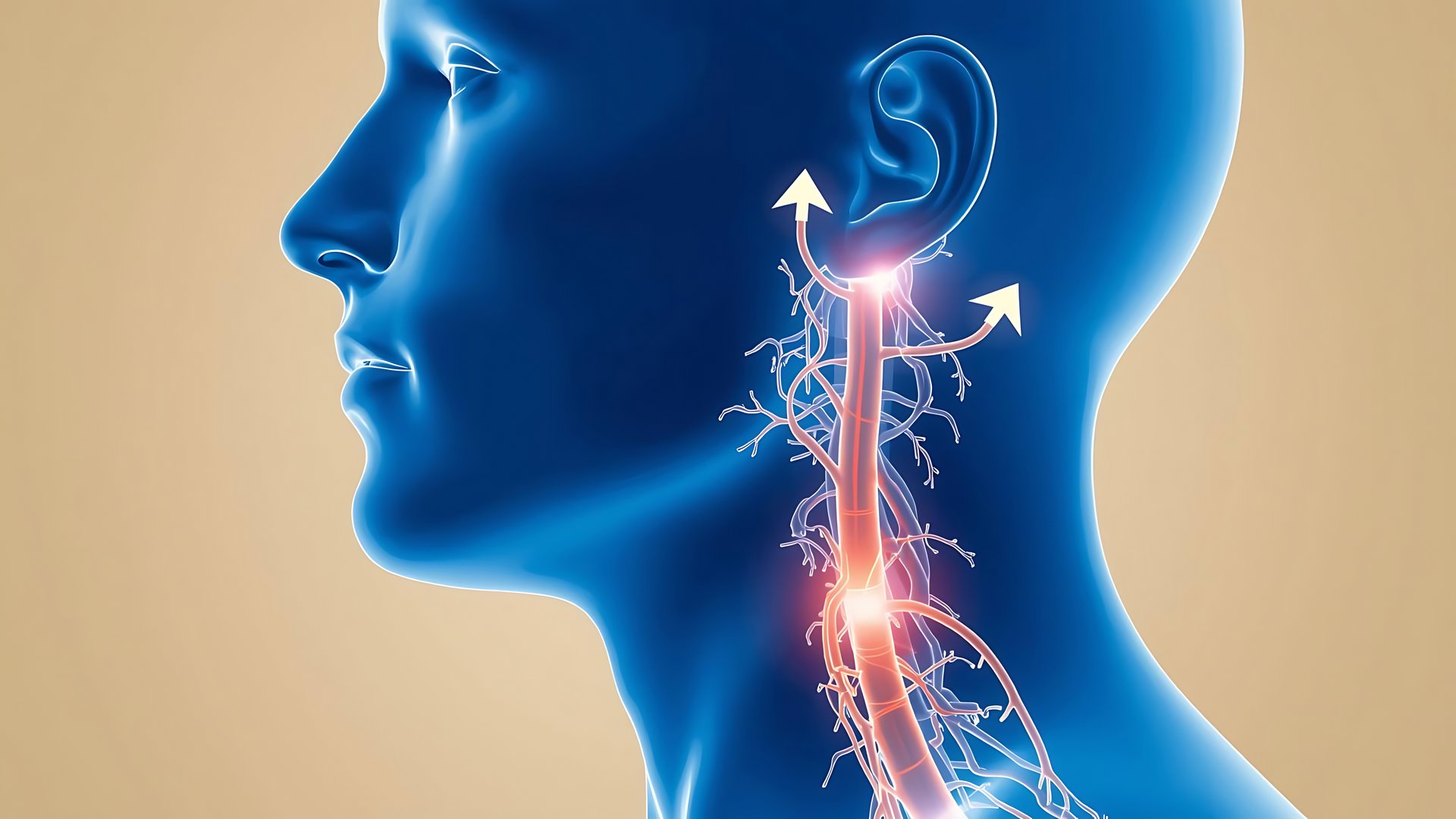
For many years, neurobiology was dominated by the belief that the brain was an autonomous “command centre”, isolated from the rest of the body. However, recent studies have shown that communication between the brain and the body is far more complex, with the vagus nerve playing a key role in this process. It is the longest of the cranial nerves and an important element of the parasympathetic nervous system, responsible for the two-way exchange of information between the brain and most internal organs, from the heart and lungs to the digestive system.
Traditionally, the vagus nerve was associated primarily with regulatory functions, such as slowing heart rate or supporting digestion. Why, then, has it attracted the interest of researchers studying memory and neurodegenerative diseases? The answer lies in its unique anatomy. As much as 80% of the fibres forming the vagus nerve are sensory fibres that do not send information from the brain to the body but in the opposite direction, continuously transmitting signals from our organs to the brain. This information reaches specific brain regions responsible, among other things, for emotions, motivation, memory and learning.
How Can Natural Memory Mechanisms Be Stimulated?
To understand the importance of research on the vagus nerve, we should examine the processes occurring in both healthy and diseased brains. In Alzheimer’s disease, pathological accumulation of beta-amyloid and tau proteins leads to chronic inflammation, neuronal damage and impaired synaptic plasticity, namely the brain’s ability to strengthen and weaken connections between neurons in response to new experiences. Synaptic plasticity is the foundation of learning and memory. Its disruption limits the brain’s capacity to create and consolidate new memories.
Research on vagus nerve stimulation indicates that activating its sensory endings with electrical impulses may trigger processes that support normal brain function. Such stimulation affects, among other things, the activity of the noradrenergic system, increasing the release of noradrenaline and other neurotransmitters, such as acetylcholine, which play a crucial role in learning and memory processes.
Research conducted at the Department of Neurobiology of the University of Lodz has provided a better understanding of how vagus nerve stimulation affects the activity of brain structures responsible for memory and cognitive functions. One of the most important stages of this research involved determining the optimal stimulation parameters, including the frequency, intensity and duration of electrical impulses, that make it possible to modulate neuronal activity effectively and safely.
From Understanding the Mechanism to Developing a Solution
The more than decade-long collaboration between Prof. Jan Konopacki and dr hab. Renata Bocian, Associate Professor at the University of Lodz, from the Department of Neurobiology of the University of Lodz and the Polish company Cogniguard is an example of the practical significance of this research. The result of many years of preclinical research and cooperation between the two teams was the development of the Vguard system, a non-invasive, home-use vagus nerve neuromodulation device intended for people with mild cognitive impairment and patients in the early stages of Alzheimer’s disease.
The innovation of this solution lies in the use of vagus nerve stimulation without the need for surgical procedures, which carry a risk of complications. The system uses specially designed ear electrodes connected to a stimulator, which delivers precisely selected electrical impulses during sleep to stimulate the auricular branch of the vagus nerve. The use of this period is no coincidence, as sleep plays a vital role in memory consolidation and the proper functioning of the brain. One of the key challenges of the research was to identify stimulation parameters that would both effectively influence neuronal mechanisms and ensure user safety and comfort.
The knowledge gained through preclinical research became the foundation for developing a solution that combines neurobiological discoveries with practical medical applications, opening up new possibilities for the use of vagus nerve stimulation in the treatment of neurodegenerative diseases.
Hope Grounded in Science
At a time when rapid results and ready-made medical solutions are often expected, it is worth remembering the importance of basic research. Its purpose is not the immediate creation of a product but rather understanding the mechanisms governing the functioning of living organisms. The history of medicine shows that discoveries made at this stage often become the starting point for breakthrough therapeutic solutions. Without decades of research into the functioning of the nervous system and methods of modulating neuronal activity, it would not have been possible to develop safe techniques based on vagus nerve stimulation.
The story of Vguard technology demonstrates that the greatest value of basic research lies not only in discovering new biological mechanisms but also in laying the foundations for future therapies. It is thanks to the many years of work carried out by scientists from the Department of Neurobiology of the University of Lodz that it has been possible to develop a solution that opens up new perspectives in the treatment of Alzheimer’s disease. In the face of an ageing population and the growing number of people affected by neurodegenerative diseases, achievements such as this show that investing in science is an investment in the future of public health.
Source: dr hab. Renata Bocian, Associate Professor at the University of Lodz
Edit: Michał Gruda (Centre for External Relations and Social Responsibility of the University)