Where did the idea to photograph the canals of Lodz come from?
My adventure with photography has been going on for many years, although I still consider myself an amateur. I have long been fascinated by abandoned places – factories, palaces, houses but also underground spaces. Over the years, I and my friend (a mountaineer and specialist in working at heights) have visited various caves, bunkers and shelters. And it was this fascination with the underground that eventually led me to the sewers.
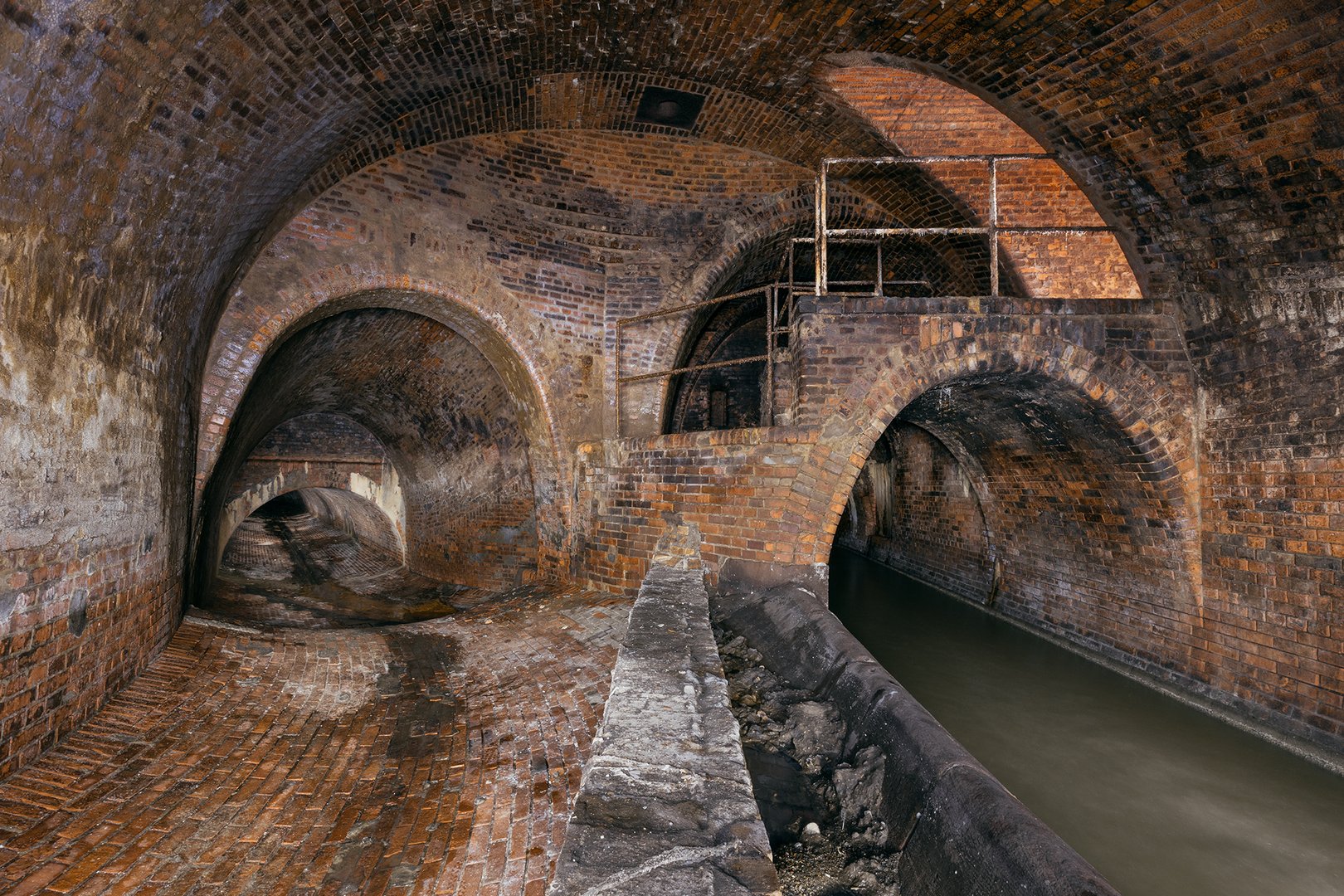
The canals of Lodz are unique in the country – mostly made of brick, designed, like those in Warsaw, by William Lindley. This is a part of the city's history that we don't see every day, even though we literally walk through it. Few people realise that, for example, the Łódka River flows right under the Manufaktura market square.
It started with curiosity, and then I discovered how unusual, photogenic and diverse these spaces are.
What is so special about the canals of Lodz?
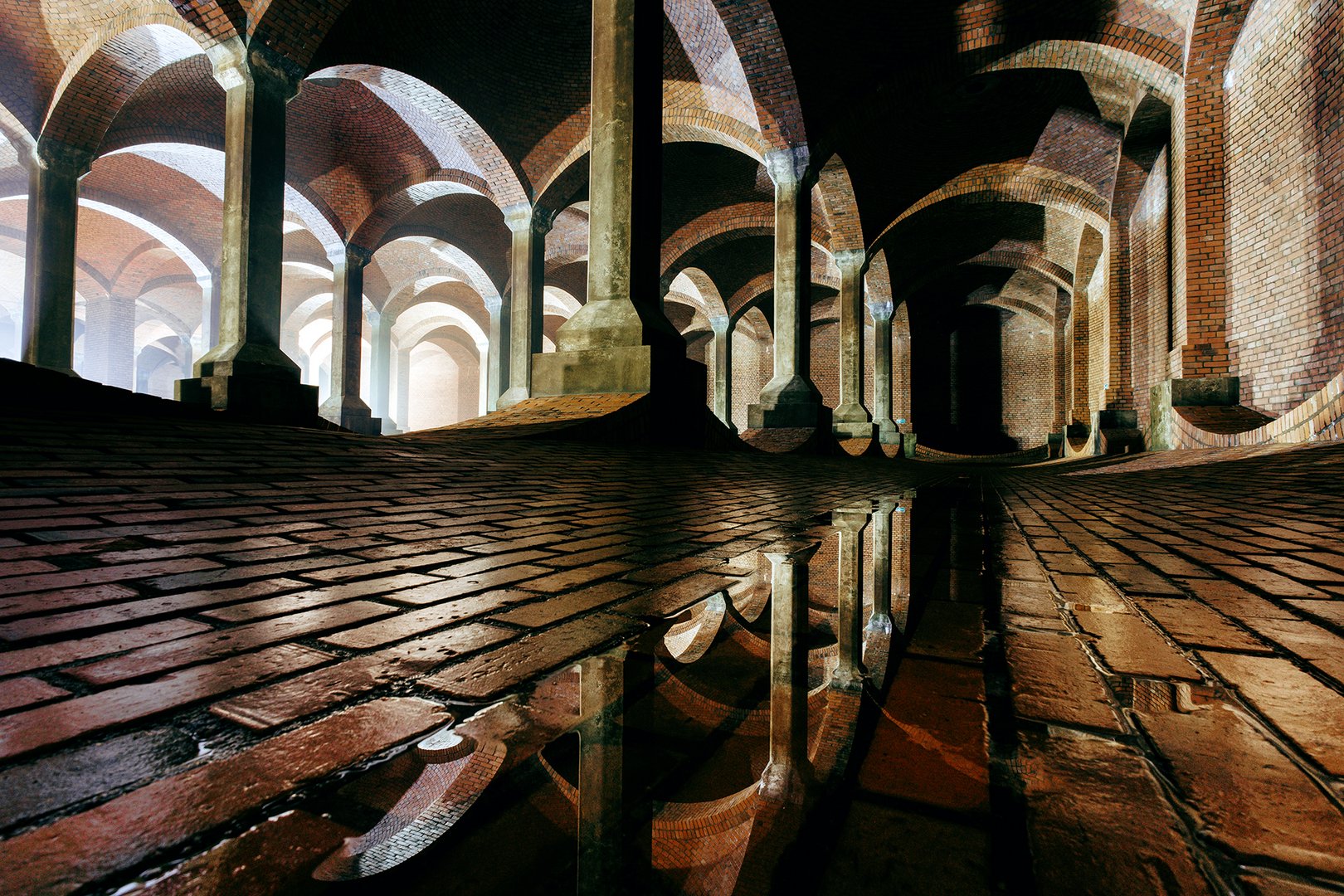
First of all, the fact that they are made of brick – this makes them resemble underground tunnels from the 19th century, instead of raw concrete culverts. In addition, there is a variety of cross-section shapes – egg-shaped, bell-shaped and on a large architectural scale. These are underground structures of true craftsmanship.
However, there is something else: mystery and inaccessibility. These are places that not everyone can enter. Red brick factories and workers' housing estates have defined the nature of our city for years. Meanwhile, another "brick city" stretches out beneath it, invisible at first glance. We see Lodz from above, but we do not know its "second level". Every day we walk through streets that hide brick corridors and overflow chambers.
For a photographer, it's a goldmine of topics.
Where were the photos for the exhibition taken?
The project mainly included photos from the most important canalised rivers in Lodz, i.e.:
- Łódka – including under the area of the Manufaktura Shopping Centre,
- Jasień – near Tymienieckiego and Piotrkowska,
- Karolewka, in Polesie, in the southwestern part of Lodz
- Bałutka – in the area of the Bałucki market square,
- and photos from the so-called "star" located under the Łódź Kaliska railway station
How long did the preparations take and what was the work underground like?
A single descent lasted about 4-5 hours, and the entire session – almost two months. I photographed some channels during two or three descents.
Taking photos in the sewers is a tedious process. In the dark, the only light is a flashlight. The camera is on a tripod with a long exposure – up to 5-7 minutes. Everything is lit manually. One photo could take 10 minutes to take, and after a several-hour descent I would return with… three or four successful frames.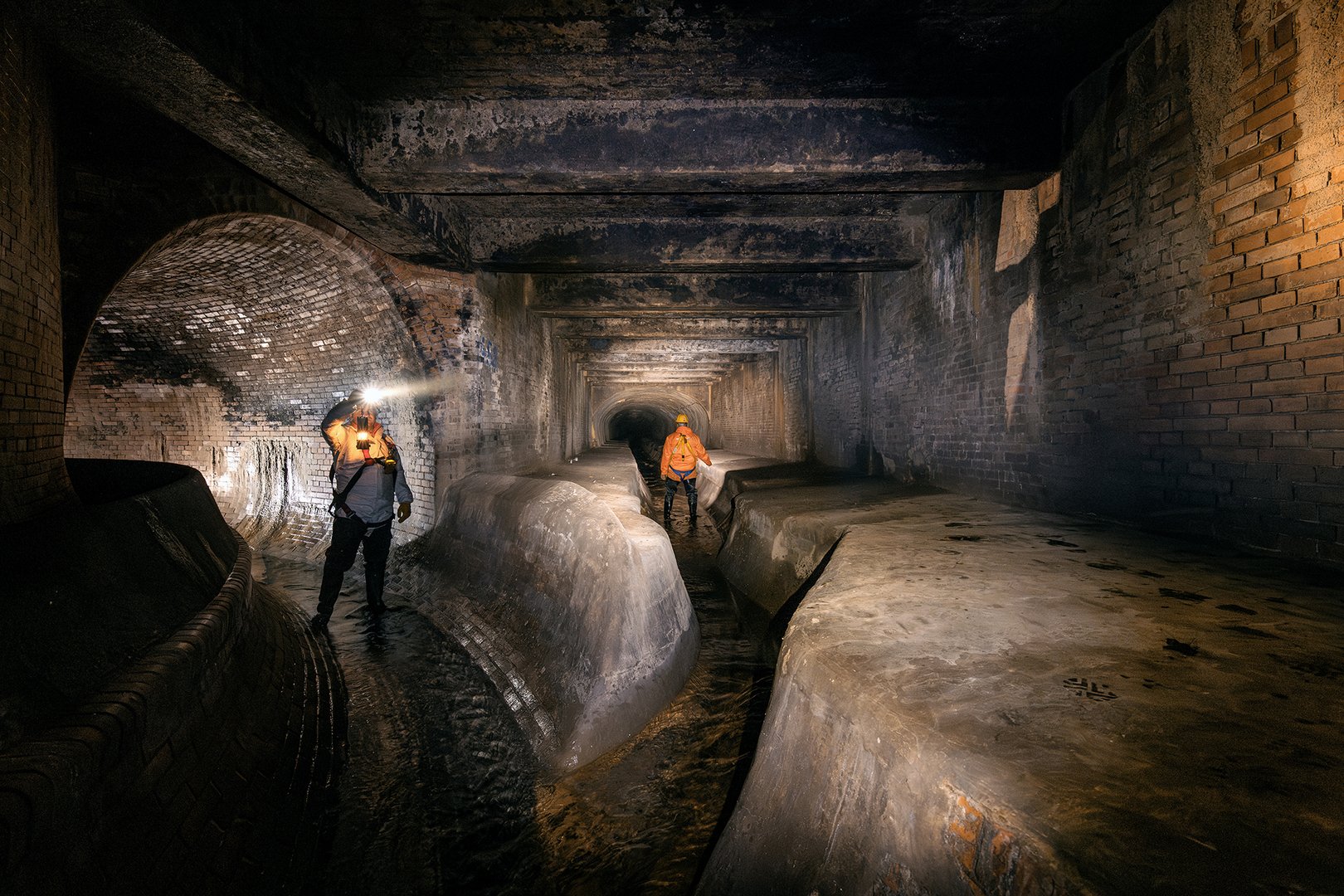
What was the descent into the sewers like from the safety side?
It was very strict. ZWiK follows the procedures and we had to do the same.
- Before each entrance, the canal was ventilated by opening two manholes.
- Workers placed gas detectors inside.
- I descended in a harness, helmet and secured with a rope attached to a metal tripod.
- I was always accompanied by two workers in the canal and two belayed from above.
- We didn't go more than 50 metres from the hatch.
There was never a dangerous situation during the photo shoot, but this was mainly due to the professionalism of the staff who accompanied me.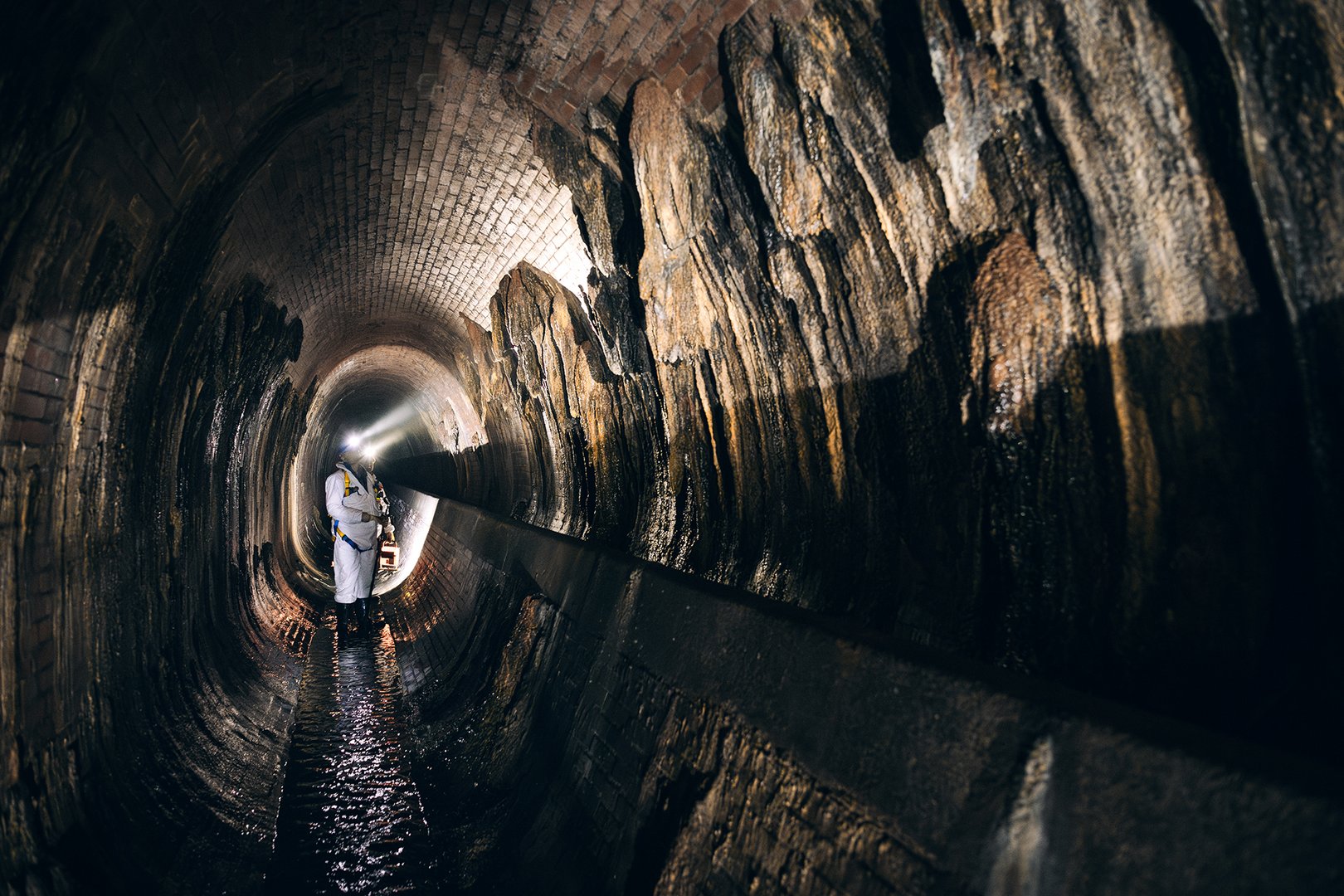
What was the biggest challenge?
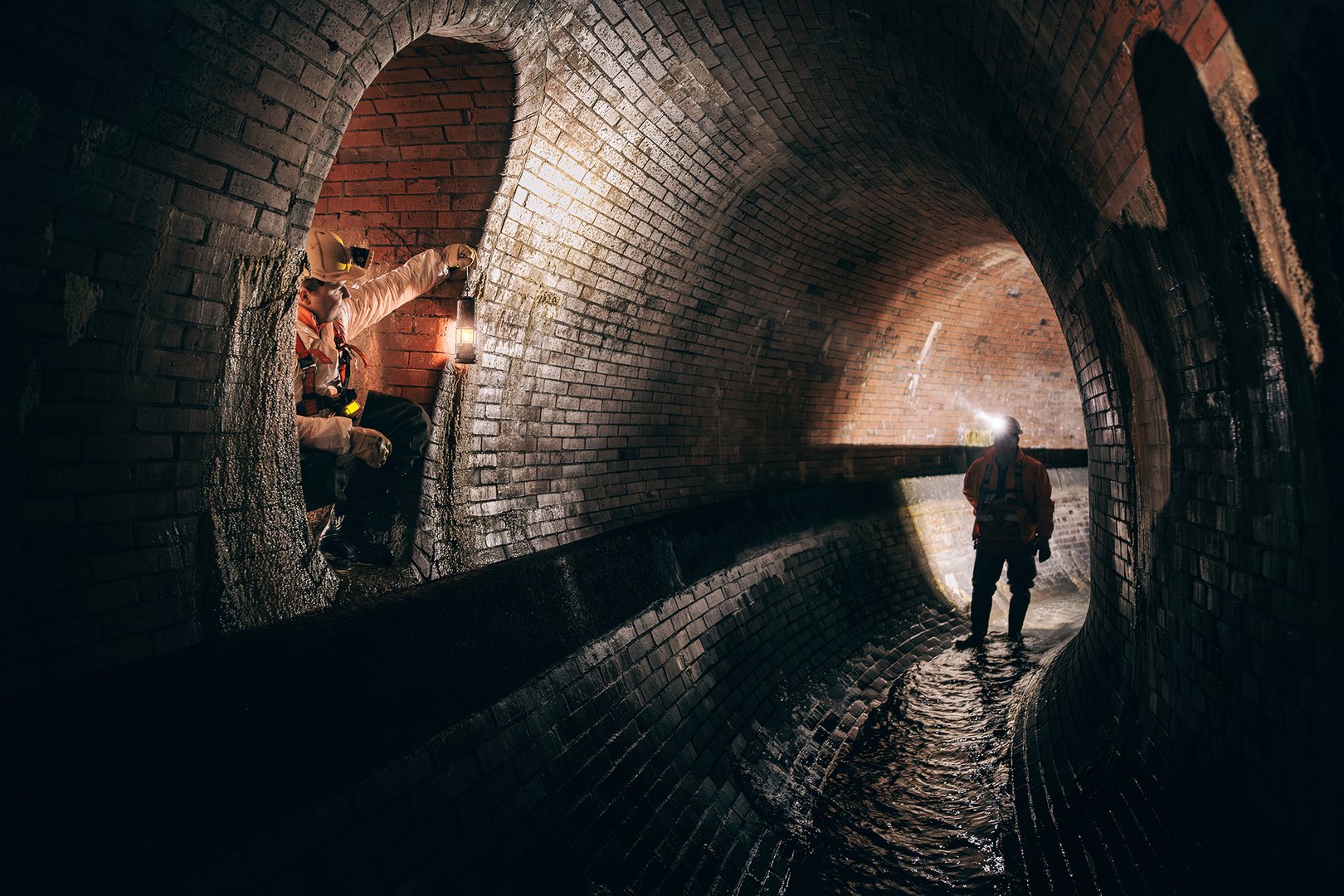
The hardest part was… photographing people. So far I had only taken photos of the canals. This time I was asked to include ZWiK employees in the photos. This is a completely different type of photography.
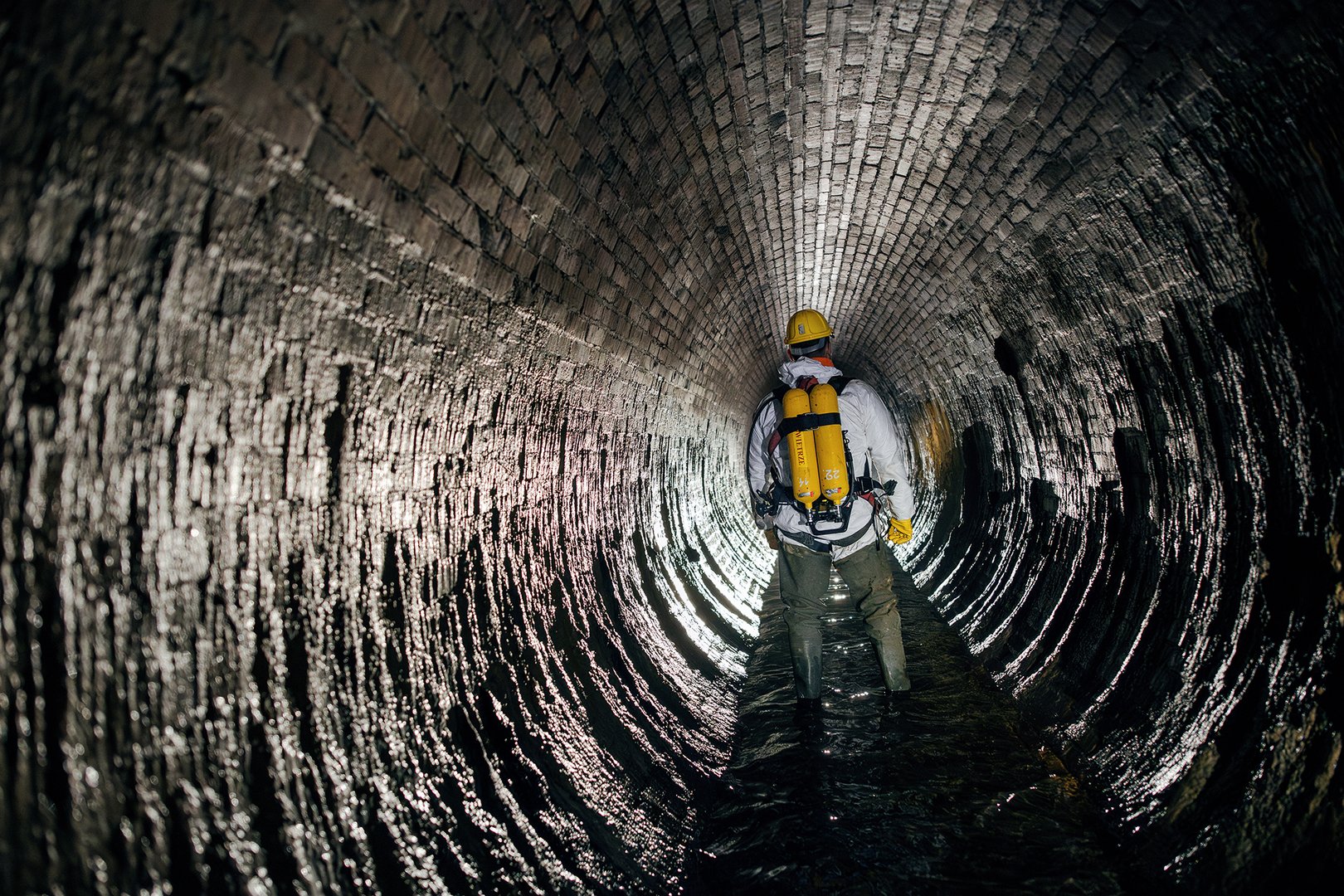
I couldn't illuminate the space for long minutes. I had to use the light from their headlamps and lamps. It was difficult to focus in complete darkness while still ensuring the photos remained natural and unstaged. The employees did not want to pose. And that was great. The idea was to show the authentic work and scale of the channels in relation to humans.
I must admit that these photos inspired me a lot. I have seen how interesting a person looks in the underground space for the first time.
Did anything surprise you while creating the exhibition?
Yes, I discovered two places I had not known before: large overflow chambers, very impressive in their scale. I was also positively surprised by how well the photos with people turned out, and how much the perception of space changes when you see the proportions.
I also understood how difficult the work of ZWiK employees is. We descended into the spacious canals. They often work every day in narrow, dirty sewers, 1.3 meters high, in difficult conditions, sometimes for half a day.
Have you photographed people before?
No, I haven’t. Previously, I avoided having a human in the frame – both in urbex and underground. Now I see that the human presence gives the photos context, scale and story. I would like to continue this – especially in caves, where the proportions of space are enormous, and also in industrial plants.
I was fascinated by photographs of people at work – from miners to shoemakers and CHP workers. This is a world we don't see every day.
Is this exhibition somehow connected with your work at the faculty?
No, it isn’t. I professionally work with oncobiology and organometallic compounds in the context of their anticancer activity at the Institute of Biophysics. Sewers are a completely different world than science, although – jokingly – I sometimes tell my biologist friends that I can bring them interesting samples for research. Lots of invertebrates and microorganisms live underground. Moreover, such studies were carried out 20 years ago and many researchers would certainly be curious to see how the fauna of the canals has changed.
There is certainly huge scientific potential there – you just have to go down legally and with the assistance of ZWiK.
What are your further plans?
There is still much to do in Lodz. In addition to utility canals, there are old, disused historical canals – often uncovered during renovations. I would like to document them before they disappear. Their future is varied – some are buried by development investments.
I am also considering continuing my cooperation with ZWiK – especially in the area of photography of underground workers.
Outside of Lodz, I would like to develop photography of people in unusual workplaces – in industrial plants, mines and heat and power plants. This is a little-known, yet extremely fascinating topic.
Would you like to add something at the end?
Perhaps only that the underground of Lodz has enormous potential – historical, photographic and scientific. They should be taken care of and showed, as they are a part of the city's identity. For me, they are, above all, a place where I can combine my passion for photography, curiosity and the desire to discover what is hidden beneath the surface.
And one more word about passion. Work is one thing, but it’s good to have passions and hobbies in life. It's not about immediately becoming a world champion in some field, but about having a piece of time for something that is simply fun and is a break from everyday life, a kind of private reset where you don't think about emails, problems to solve or publications to write. That's why it's so important to have something "own" in life and not to give it up – whether it's photography, as in my case, or making pots, or running – complete freedom. What counts is the fact that we are engaged in something that is not work, but that gives us satisfaction, reset and joy.
Dr Paweł Hikisz is an Assistant Professor at the Department of Oncobiology and Epigenetics at the Faculty of Biology and Environmental Protection, University of Lodz.
His key research interests focus on the intersection of molecular biology and medicinal chemistry. Dr Hikisz studies the mechanisms of cell death, especially the molecular mechanisms of anticancer activity of newly synthesised organometallic derivatives. His work aims to search for new therapeutic paths in oncology, taking into account the role of metals in medicine.
In parallel to his scientific career, Dr Hikisz develops his passion for photography. In his work, he focuses primarily on immortalising abandoned places, industrial and post-industrial landscapes, as well as remnants of human histories – palaces, houses and forgotten spaces. He also devotes more and more attention to photography of people, developing this part of his passion and searching for new ways of telling the story of people in their surroundings.
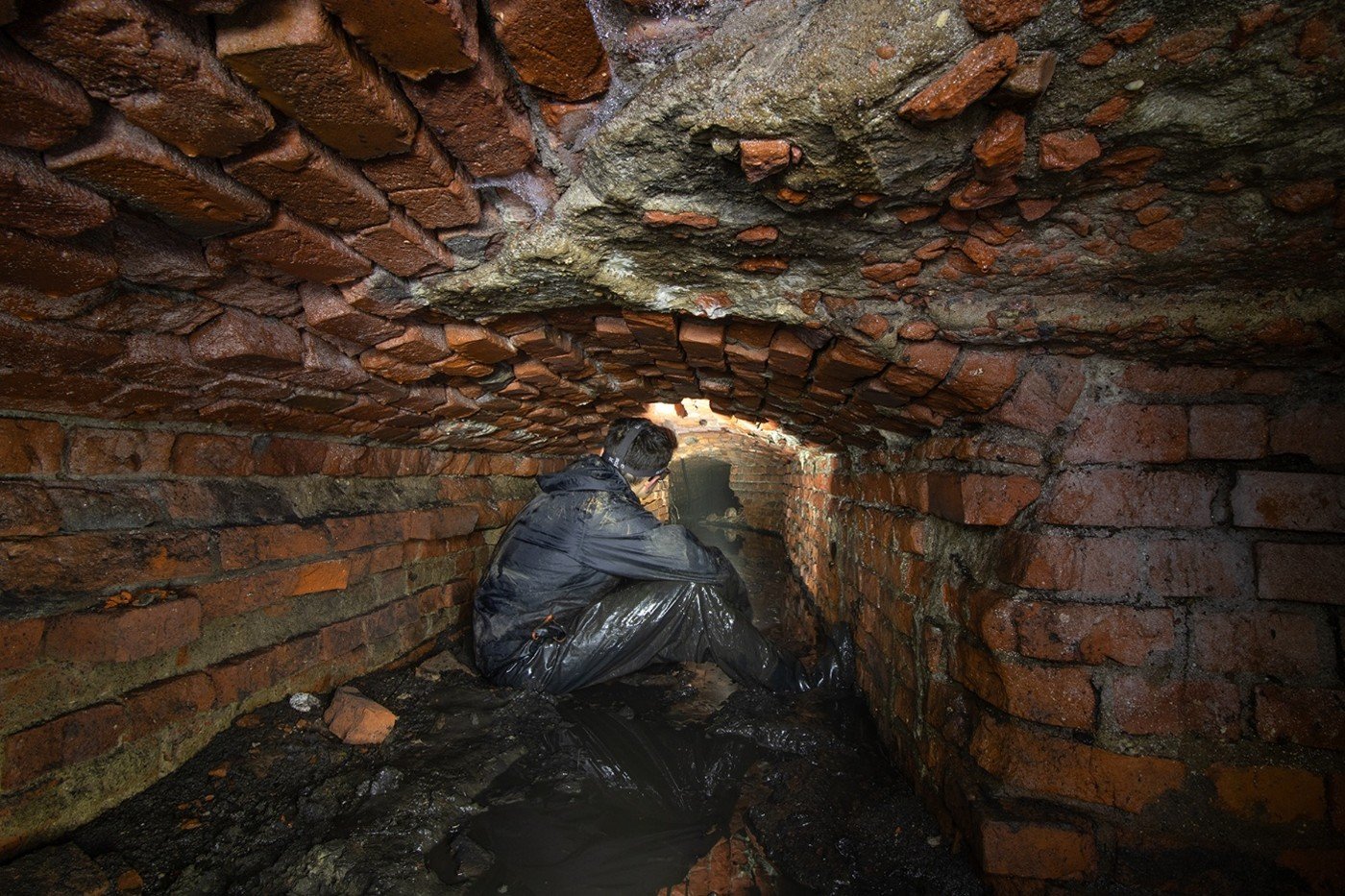
In the photo: Dr Paweł Hikisz during a photo shoot for the exhibition "Podziemna Łódź"
Source and photos: Dr Paweł Hikisz (Department of Oncobiology and Epigenetics, Faculty of Biology and Environmental Protection, University of Lodz)
Edit: Kamila Knol-Michałowska (Promotion Centre, Faculty of Biology and Environmental Protection, University of Lodz)